新書推薦:

《
为自己工作 我们的gap期生存游戏(一本“不务正业”的普通人访谈录,记录他们跳下轨道奔向旷野的冒险故
》
售價:HK$
68.2

《
爱的修复:伴侣咨询中的冲突、理解与接纳
》
售價:HK$
76.8
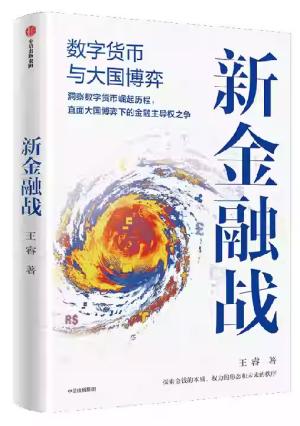
《
新金融战:数字货币与大国博弈
》
售價:HK$
96.8

《
亲爱的波伏瓦:跨越时空的女性对话
》
售價:HK$
74.8
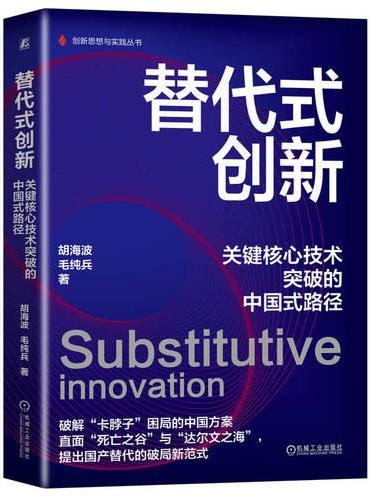
《
替代式创新:关键核心技术突破的中国式路径
》
售價:HK$
97.9

《
阴郁之人的晴朗之地
》
售價:HK$
68.2

《
金融陷阱
》
售價:HK$
75.9

《
豆包AI从会用到精通
》
售價:HK$
63.8
|
| 內容簡介: |
|
艾克拿默编著的《固体物理学》内容介绍:In selecting the material and the presentation of this textbook I was aiming at the advanced undergraduatefirst year graduate level, or so I was intending. Chapters 1-8 with some possible omissions and additions, depending on the students'' interests and the instructor''s preferences can serve as the core of a senior undergraduate course on Solid State Physics addressed to students in Physics, Chemistry, Materials Science, and Engineering. The book is designed to serve also as a textbook in, a first-year graduate course on the Physics of Solids. Some familiarity with Electromagnetism, Quantum Mechanics, and Statistical Physics is assumed; anyway, extensive outlines of these subjects are presented in Appendices A, B, and C, respectively.
|
| 目錄:
|
Part ⅠAn Overview
1 Basic Principles Summarized
1.1 The Atomic Idea: From ElementaryParticles to Solids
1.2 Permanent i.e., Equilibrium Structures of Matter Correspond to the Minimum of Their Free Energy
1.3 Condensed Matter Tends to Collapse Under the Influence of Coulomb Potential Energy
1.4 Quantum Kinetic Energy Counterbalances Coulomb Potential Energy Leading to Stable Equilibrium Structures
1.4.1 Heisenberg''s Uncertainty Principle and the Minimum Kinetic Energy
1.4.2 Pauli''s Exclusion Principle and the Enhancement of the Minimum Kinetic Energy
1.4.3 Schrodinger''s Spectral Discreteness and the Rigidity of the Ground State
1.5Dimensional Analysis
1.6 Key Points ,
1.7Questions and Problems
2 Basic Principles in Action
2.1Size and Energy Scale of Atoms
2.2 Why do Atoms Come Together to Form Molecules and Solids?
2.3 Ionic Motion:- Small Oscillations
2.4 Why do the Specific Heats of Solids go to Zero as T→OK?
2.5When is Classical Mechanics Adequate?
2.6 Estimating Magnitudes Through Dimensional Analysis
2.6.1Atomic Radius, Ra
……
Part Ⅱ Two Simple Models for Solids
Part Ⅲ More About Periodicity its Consequences
Part Ⅳ Materials
Part Ⅴ Deviations from Periodicity
Part Ⅵ Correlated Systems
Part Ⅶ Appendices
|
|

 購物車/收銀台(0) | 在線留言板
| 付款方式
| 運費計算
| 聯絡我們
| 幫助中心 |
加入書簽
購物車/收銀台(0) | 在線留言板
| 付款方式
| 運費計算
| 聯絡我們
| 幫助中心 |
加入書簽 HOME
HOME 新書上架
新書上架 暢銷書架
暢銷書架








