新書推薦:

《
记号132 制造时间:人类计时简史
》
售價:HK$
75.9

《
变形金刚全新漫画战火重燃+故土难归+绝境逢生(全3册)(能量块宇宙系列合订本,刚丝不容错过,美国漫画
》
售價:HK$
224.4

《
看见国家宝藏:60件国宝讲述中华文明
》
售價:HK$
140.8

《
闺思:宋元社会变迁下的女性与贞节观
》
售價:HK$
107.8

《
劫掠、贸易与海洋帝国:海上劳工与英格兰的崛起,1570―1630
》
售價:HK$
107.8

《
新HSK教程1
》
售價:HK$
97.9

《
辨证录:彩图版全本:全两册
》
售價:HK$
217.8

《
灰度空间 :城市贫民的地下经济
》
售價:HK$
74.8
|
| 內容簡介: |
|
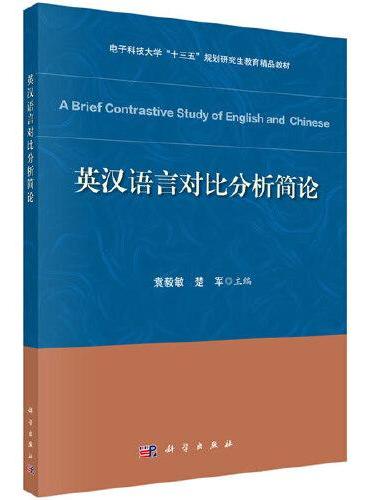
《英汉语言对比分析简论》从语言的动态与静态、显性与隐性、刚性与柔性、主观与客观,以及抽象与具象五个角度对比分析英汉两种语言的特征。《英汉语言对比分析简论》共分为五个单元,每个单元从*基础的语法现象与规则出发,引导学生注意并归纳两种语言在词素、词、句子、篇章等层面上的系统差异,继而激发学生思考这些差异背后的原因,*后让学生在真实的语篇环境中去探索和解释目标现象。
|
| 目錄:
|
Contents
Preface
Unit 1 Stativeness and Dynamicity 1
1. Discussion 1
2. Introduction 1
3. Stativeness and dynamicity in the two languages 1
3.1 Stativeness and dynamicity with different parts of speech 2
3.2 Stativeness and dynamicity in the translation from English to Chinese 8
3.3 Stativeness and dynamicity in the translation from Chinese to English 13
3.4 Reflection 18
4. Extensive analysis 18
4.1 Reading 18
4.2 Discussion 19
Unit 2 Overtness and Covertness 21
1. Discussion 21
2. Introduction 21
3. Overtness and covertness in the two languages 22
3.1 Overtness and covertness with grammar 22
3.2 Overtness and covertness with semantics 23
3.3 Overtness and covertness in the translation from Chinese to English 29
3.4 Overtness and covertness in the translation from English to Chinese 33
3.5 Reflection 40
4. Extensive analysis 41
4.1 Reading 41
4.2 Discussion 42
Unit 3 Rigidity and Flexibility 45
1. Discussion 45
2. Introduction 45
3. Rigidity and flexibility in the two languages 46
3.1 The “rigid” English 46
3.2 The “flexible” Chinese 49
3.3 Rigidity and flexibility in the translation from Chinese to English 53
3.4 Rigidity and flexibility in the translation from English to Chinese 60
3.5 Reflection 68
4. Extensive analysis 69
4.1 Reading 69
4.2 Discussion 72
Unit 4 Subjectivity and Objectivity 73
1. Discussion 73
2. Introduction 73
3. Subjectivity and objectivity in the two languages 74
3.1 Animate subjects vs. inanimate subjects 74
3.2 Active voice vs. passive voice 78
3.3 Subjectivity and objectivity with subjects 83
3.4 Subjectivity and objectivity with voice 89
3.5 Reflection 96
3.6 Extensive analysis 97
4. Extensive analysis 100
4.1 Reading 100
4.2 Discussion 101
Unit 5 Abstraction and Concretion 103
1. Discussion 103
2. Introduction 103
3. Abstraction and concretion in the two languages 104
3.1 Abstract English and concrete Chinese 104
3.2 Translation from abstract English to concrete Chinese 105
3.3 Translation from concrete Chinese to abstract English 108
3.4 Abstraction and concretion in the translation from English to Chinese 110
3.5 Abstraction and concretion in the translation from Chinese to English 114
3.6 Reflection 117
4. Extensive analysis 118
4.1 Reading 118
4.2 Discussion 120
Key to Exercises 122
Unit 1 122
Unit 2 131
Unit 3 147
Unit 4 163
Unit 5 175
References 183
|
|

 購物車/收銀台(0) | 在線留言板
| 付款方式
| 運費計算
| 聯絡我們
| 幫助中心 |
加入書簽
購物車/收銀台(0) | 在線留言板
| 付款方式
| 運費計算
| 聯絡我們
| 幫助中心 |
加入書簽 HOME
HOME 新書上架
新書上架 暢銷書架
暢銷書架